
Authorized AMSOIL Dealer
Joseph Feghali
Miami, FL

1981 Ford Mustang 2.3L Oil Type and Capacity

Free Vehicle Maintenance App

For cars, trucks, ATVs & more

Track oil changes, save service records, and get maintenance reminders.

Keep your maintenance history handy for your next service.

Your Vehicle's Information

Year:

1981

Make:

Ford

Model:

MUSTANG

Engine Size:

2.3L

Engine #:

[T]

Recommended Synthetic Oil for a 1981 Ford Mustang 2.3L

Product Name Product Description Capacities Product
Signature Series 5W-30 Synthetic Motor Oil Save time and money and costly repairs at the auto shop! Amsoil has your back! Bullet proof your Mustang's engine! With filter 4.5 quarts After refill check oil level. ASLQT-EA
Signature Series 5W-30 Synthetic Motor Oil ASLQT-EA
Add To Cart
Add To Cart
XL 5W-30 Synthetic Motor Oil Protect your Mustang with the best synthetic oil! Amsoil backs up all claims with proof! Support American Oil! With filter 4.5 quarts After refill check oil level. XLFQT-EA
XL 5W-30 Synthetic Motor Oil XLFQT-EA
Add To Cart
Add To Cart
OE 5W-30 Synthetic Motor Oil AMSOIL OE Synthetic Motor Oil is specially made for the extended oil change intervals recommended for your 1981 Ford Mustang 2.3L. It has advanced synthetic technology that resists chemical breakdown for maximum wear protection for your vehicle which is well beyond the traditional 3,000-mile oil change interval. With filter 4.5 quarts After refill check oil level. OEFQT-EA
OE 5W-30 Synthetic Motor Oil OEFQT-EA
Add To Cart
Add To Cart

Recommended transmission fluids for my 1981 Mustang

Product Name Note Capacities Product Description Product
Signature Series Multi-Vehicle Synthetic Automatic Transmission Fluid Automatic Transmission Fluid
(1) This specification has been updated from Mercon to Mercon V per TSB 06-14-4
3 speed C3 Total Fill 8 quarts 3 quarts Initial Fill
3 speed C4 Total Fill 7.4 quarts 3 quarts Initial Fill
Amsoil's Signature Series Multi-Vehicle Synthetic automatic transmission fluid is made to blow the doors off any regular or conventional ATF fluids on the market and our oil surpasses the performance needs of most vehicles. Protect your transmission and avoid costly repairs. This fluid has an advanced formula to give awesome top-notch protection under harsh operating conditions. Transmission repairs are expensive so protect your vehicle with this great fluid! ATFPK-EA
Signature Series Multi-Vehicle Synthetic Automatic Transmission Fluid ATFPK-EA
Add To Cart
Add To Cart
OE Multi-Vehicle Synthetic Automatic Transmission Fluid Automatic Transmission Fluid
(1) This specification has been updated from Mercon to Mercon V per TSB 06-14-4
3 speed C3 Total Fill 8 quarts 3 quarts Initial Fill
3 speed C4 Total Fill 7.4 quarts 3 quarts Initial Fill
Outsanding protection and resists varnish! Change interval based on your Mustang's recommendation. OTFQT-EA
OE Multi-Vehicle Synthetic Automatic Transmission Fluid OTFQT-EA
Add To Cart
Add To Cart
Torque-Drive® Synthetic Automatic Transmission Fluid Automatic Transmission Fluid
(1) This specification has been updated from Mercon to Mercon V per TSB 06-14-4
3 speed C3 Total Fill 8 quarts 3 quarts Initial Fill
3 speed C4 Total Fill 7.4 quarts 3 quarts Initial Fill
Awesome protection under extreme temperature! Protect heavy-duty transmissions with this made in the USA oil. Follow the service interval in your owner's manual. Protect your Ford. ATD1G-EA
Torque-Drive® Synthetic Automatic Transmission Fluid ATD1G-EA
Add To Cart
Add To Cart

Differential for my Ford Mustang

Product Name Note Capacities Product Description Product
SEVERE GEAR® 80W-90 (1) Identification: see upper left differential tag, code on plate at driver's door. Rear 3.6 pints
WFZ Rear 3.8 pints
WGG Rear 2.5 pints
This lube is made to exceed the requirements of equipment and all vehicles that require SAE 80W-90 viscosity. It is made with synthetic base oils and top additives without adding any wax. Amsoil Severe Gear is solid against thermal breakdown. Will give you awesome protection for bearings and gears and tough against heat which will help extend the life of your equipment and avoid costly repairs. Made in the U.S.A. AGLPK-EA
SEVERE GEAR® 80W-90 AGLPK-EA
Add To Cart
Add To Cart
SEVERE GEAR® 75W-90 (1) Identification: see upper left differential tag, code on plate at driver's door. Rear 3.6 pints
WFZ Rear 3.8 pints
WGG Rear 2.5 pints
This special formula is made for harsh operating conditions that pick-up trucks endure. Also top-notch protection for SUVs, heavy equipment, and other heavy-duty vehicles. Made in the USA. SVGPK-EA
SEVERE GEAR® 75W-90 SVGPK-EA
Add To Cart
Add To Cart
SEVERE GEAR® 75W-110 (1) Identification: see upper left differential tag, code on plate at driver's door. Rear 3.6 pints
WFZ Rear 3.8 pints
WGG Rear 2.5 pints
This is a fantastic lubricant for towing trailers, heavy duty hauling, off road driving/4x4, commercial applications, and for race enthusiasts. This severe gear lube will protect bearings, gears from friction and exceeds performance of any regular gear oil out there! Keep your truck or vehicle out of the shop and avoid costly repairs with this made in the USA lube. SVTPK-EA
SEVERE GEAR® 75W-110 SVTPK-EA
Add To Cart
Add To Cart

Recommended coolants for my Ford Mustang

Product Name Product Description Capacities Product
Passenger Car & Light Truck Antifreeze & Coolant maximum protection for your 1981 Ford Mustang under extreme temperatures and operating conditions! Lasts up to 150,000 miles or five years! (whichever comes first) ANTPC1G-EA
Passenger Car & Light Truck Antifreeze & Coolant ANTPC1G-EA
Add To Cart
Add To Cart
Low Toxicity Antifreeze and Engine Coolant Lasts in your 1981 Ford Mustang for up to 150,000 miles or five years! (whichever comes first). Biodegradable! ANT1G-EA
Low Toxicity Antifreeze and Engine Coolant ANT1G-EA
Add To Cart
Add To Cart

Maintaining Lubrication Standards for a 1981 Ford MUSTANG 2.3L

Proper engine care for a vehicle of this era requires a focus on consistent monitoring and adherence to specific fluid requirements. For the 1981 Ford Mustang equipped with the 2.3L engine, maintaining the lubrication system is a fundamental aspect of long-term mechanical health. Because older engines may exhibit different sealing characteristics or material behaviors compared to modern vehicles, a proactive approach to maintenance is highly beneficial.

Monitoring Fluid Integrity and Condition

One of the most effective ways to monitor the health of the 2.3L engine is through regular observation of the engine oil's physical condition. While routine changes are necessary, the state of the lubricant between services can provide useful information. If the oil appears excessively dark or contains visible particulates, it may indicate that the engine is accumulating deposits or that the filtration process requires closer attention. It is also important to watch for any signs of unexpected consumption. An owner should regularly check the dipstick level to ensure the volume remains within the appropriate range. Significant changes in how much oil the engine uses can be associated with various factors, including aging seals or changes in operating conditions. If a sudden increase in consumption is noticed, it warrants a thorough inspection of the engine bay for any signs of seepage or external leakage.

Observing Potential Warning Signs

When performing routine checks, being observant of subtle changes can help prevent more significant issues. While many symptoms can have multiple underlying causes, certain indicators should never be ignored:
  • Visible Seepage: Inspect the areas around the engine block and various sealing surfaces for any evidence of fluid weeping or active leaks.
  • Unusual Noises: Any new mechanical sounds that coincide with engine operation should be investigated to determine if they are related to lubrication or other internal components.
  • Warning Indicators: If the dashboard features any oil-related warning lights, these require immediate attention to prevent potential damage.
  • Exhaust Observations: Changes in exhaust appearance can sometimes be linked to how the engine is managing its lubricants.
If any of these signs are present, it is best to seek a professional diagnosis rather than attempting to identify the specific failed component through visual inspection alone.

Prioritizing Maintenance Based on Vehicle Condition

For an owner of a 1981 Mustang, maintenance priorities should ideally be driven by the actual current condition of the vehicle rather than just its age. If you have access to previous service records, reviewing them can help establish a baseline for what has been performed and what might be approaching a service interval. If historical documentation is unavailable, establishing a new maintenance baseline is a practical first step. This involves performing a comprehensive inspection of all fluids, belts (if equipped), and hoses (if present) to understand the current state of the vehicle. Once this baseline is set, you can transition from reactive repairs to a more organized preventive maintenance strategy. Addressing active leaks or addressing overdue service items should always take precedence over cosmetic or non-essential tasks.

Age-Related Inspection Considerations

As vehicles age, certain components may require more frequent scrutiny. For the 2.3L engine, this includes inspecting various gaskets and seals for signs of age-related seepage. While a small amount of "sweating" on an older engine is not always a cause for alarm, active leaks should be addressed to maintain proper fluid levels and cleanliness. Additionally, if the vehicle is equipped with accessible drive belts, these should be inspected for signs of deterioration such as cracking, glazing, or fraying. Similarly, any visible hoses should be checked for softness, swelling, or brittleness. Maintaining a clean engine bay also makes it much easier to spot new leaks or issues as they arise, so keeping the engine area free of heavy grime and debris is a helpful habit for long-term ownership.

The Importance of Consistent Lubrication Management

Effective lubrication management goes beyond simply changing the oil; it involves understanding how the lubricant interacts with the engine's components over time. High-quality lubricants are designed to manage heat, reduce friction, and control the buildup of deposits. For an older engine, maintaining this protection is vital for ensuring that internal parts continue to operate smoothly under various loads. Some high-mileage oil formulations contain additives intended for use in aging engines, including seal-conditioning additives that may assist in maintaining the integrity of older gaskets. However, the choice of lubricant should always be guided by the specific requirements of the application rather than general assumptions about engine age.

Practical Advice for Buying Engine Oil for your 1981 Ford MUSTANG 2.3L

When it is time to replenish your engine's lubricant, the most important step is to ensure the product matches the specific requirements of your vehicle. Do not rely on general automotive knowledge or assumptions based on the year and model to select a viscosity. Instead, match the engine oil to the application-specific viscosity information already displayed on this webpage. Before finalizing your purchase, consider the following:
  • Verify Labeling: Always check the product packaging to ensure it meets the necessary API certifications for your engine type.
  • Evaluate Formulations: Depending on your specific needs and the condition of your engine, you may choose between conventional, synthetic blends, or full synthetic oils. Some owners also opt for high-mileage formulations if they are managing an older engine with higher service hours.
  • Check Application Data: Use the technical data provided in the application information section of this page to ensure you are selecting the correct grade and specification.
By following the specific guidance provided in the application details, you can ensure that your 1981 Ford Mustang 2.3L receives the exact lubrication it needs for continued operation.
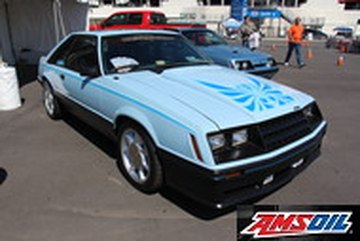
Catalog vehicle photograph for 1981 Ford MUSTANG
Vehicle photograph from our catalog. Appearance may differ by model or trim.
Visit us on social media
